
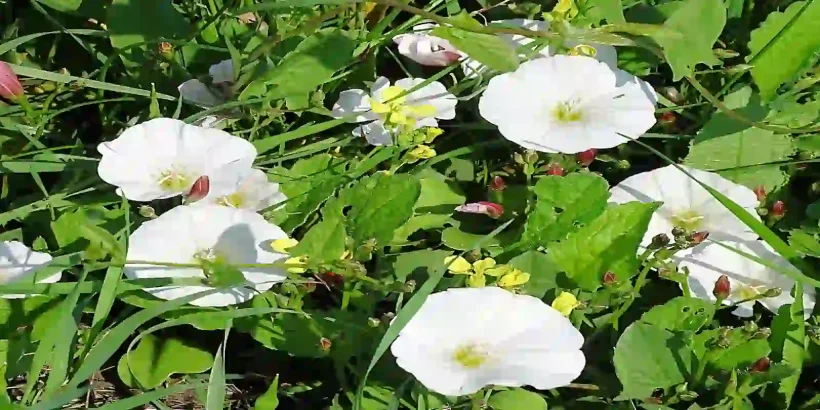
Convolvulus arvensis, commonly known as field bindweed, is a traditional Eurasian herb historically used to relieve digestive, skin and joint conditions. In recent years, growing scientific interest has uncovered potent anticancer, antioxidant and anti-inflammatory bioactivities in this plant, largely attributed to its rich content of proteoglycan mixture (PGM) in its extracts.
1. Angiogenesis and Cancer Control
One of the most studied properties of C. arvensis is its ability to inhibit angiogenesis, the formation of new blood vessels that tumours rely on for oxygen and nutrients. This anti-angiogenic activity is primarily attributed to the plant’s high content of PGM, which has demonstrated potent anticancer effects in preclinical models. For instance, a pivotal 2001 study showed that treating bone cancer in mice with C. arvensis extract – whether taken orally or by injection – reduced tumour size by 70% by blocking the formation of new blood vessels that the tumour needed to survive and grow. Subsequent studies extended these findings to other cancers, including breast, prostate, kidney, gastric and cervical, all showing sensitivity to C. arvensis via the same angiogenesis-inhibition mechanism. Since most tumours rely on angiogenesis to grow and spread, C. arvensis presents a promising plant candidate for complementary cancer care.
2. Potent Antioxidant Action
Recent research has revealed that C. arvensis also exhibits strong antioxidant properties that protect cells from oxidative damage, a known driver of ageing and chronic diseases. For instance, a 2022 study found that C. arvensis extracts mitigate oxidative stress by binding to and neutralising excess metal ions in a process called metal chelation. Excess metal ions are known to catalyse the formation of highly reactive free radicals, which can damage DNA, proteins and lipids of cells, leading to inflammation and cellular dysfunction. By chelating these excess metals, C. arvensis helps prevent oxidative stress at its root cause. These findings suggest that the potent antioxidant action of C. arvensis could have broad applications in conditions where oxidative stress plays a central role, including neurodegeneration, cardiovascular disease and cancer.
3. Potent Anti-inflammatory Capacity
In addition to its antioxidant activity, C. arvensis exhibits well-documented anti-inflammatory effects. Studies have shown that its extracts can calm the immune system by suppressing the secretion of inflammatory molecules, such as cytokines and cyclooxygenase (COX-2). Moreover, a 2024 study found that C. arvensis extracts can prevent protein denaturation, a process linked to various inflammatory diseases, such as diabetes, rheumatoid arthritis and cancer. Specifically, these extracts protected proteins from being damaged or denatured by heat, with effects comparable to diclofenac, a common anti-inflammatory drug (Figure 1). Denatured proteins are highly inflammatory because they form toxic clumps and disrupt cellular functions.
Interestingly, C. arvensis has also been used in topical gel to alleviate symptoms of arthritis (joint inflammation), with results comparable to ibuprofen. Similar to diclofenac, ibuprofen is an anti-inflammatory drug commonly used to treat pain and inflammation. Overall, with its ability to target multiple pathways involved in inflammation, oxidative stress and carcinogenesis, C. arvensis is a compelling candidate for further clinical research and potential therapeutic use in chronic diseases.
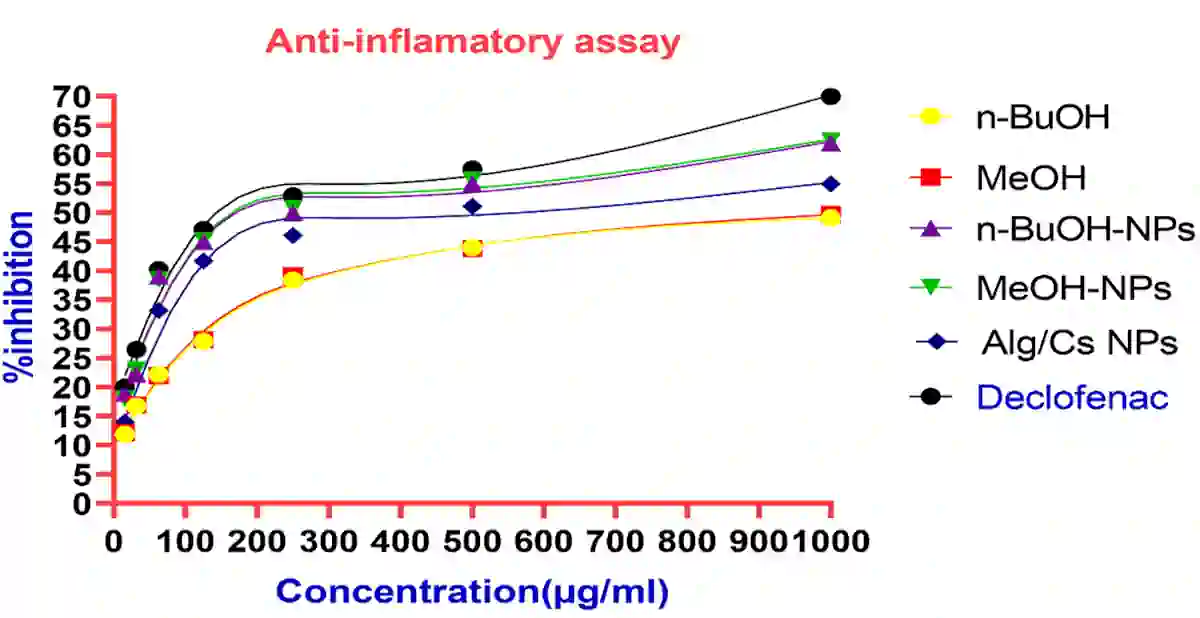
Figure 1. Effectiveness of various Convolvulusarvensis extracts in preventing inflammatory protein denaturation. Both methanol (MeOH) and butanol (BuOH) extracts of C. arvensis reduced inflammation in a dose-dependent manner. Their nano-encapsulated forms (-NPs) exhibited stronger anti-inflammatory effects, approaching the efficacy of the standard drug diclofenac. Source: Osman et al. (2024), BMC Complementary Medicine and Therapies.