

Commonly known as Baikal or Chinese skullcap, Scutellaria baicalensis has long been valued in traditional Chinese medicine for addressing various illnesses, including diarrhoea, insomnia and hypertension. Modern medicine has continued to study the health properties of this herb, shedding light on its potential use in cancer care, microbiome support and vascular conditions.
1. Anticancer Effects
Modern research has uncovered powerful anticancer properties in Baikal skullcap, largely attributed to its compounds baicalin, baicalein and wogonin. These natural compounds work through multiple pathways to inhibit cancer growth and spread. For example, baicalein has been shown to shrink prostate tumour size by disrupting androgen signalling pathways. Moreover, wogonin could make prostate cancer cells more vulnerable to immune attack by sensitising them to cytokine-induced cell death (Figure 1). In breast cancer, baicalin could stop its spread to other organs by reversing a process called epithelial-to-mesenchymal transition (EMT), where cancer cells lose their stickiness and become more mobile. In early clinical trials, Baikal skullcap has already been tested for safety among cancer patients, with one trial reporting improved immune function in chemotherapy patients. This dual ability to suppress cancer growth while supporting immune resilience makes Baikal skullcap a valuable phytotherapy in integrative cancer care.
2. Microbiome Support
Emerging evidence suggests that Baikal skullcap may also play a supportive role in maintaining a healthy microbiome, both in the mouth and the gut. This benefit is largely attributed to its antimicrobial and anti-inflammatory properties. Clinical studies using gargle solutions or toothpaste enriched with Baikal skullcap extract have shown that they can inhibit harmful oral bacteria, reduce gingival inflammation and prevent dental plaque formation, thereby reducing the risk of periodontal diseases. In a separate study involving patients with type 2 diabetes, co-treatment with Baikal skullcap extract and metformin (an anti-diabetic drug) led to favourable changes in gut microbiota composition, improved glucose metabolism and better glycaemic control compared to metformin alone. These findings suggest that Baikal skullcap supports both metabolic health and immune function by promoting a balanced microbial environment.
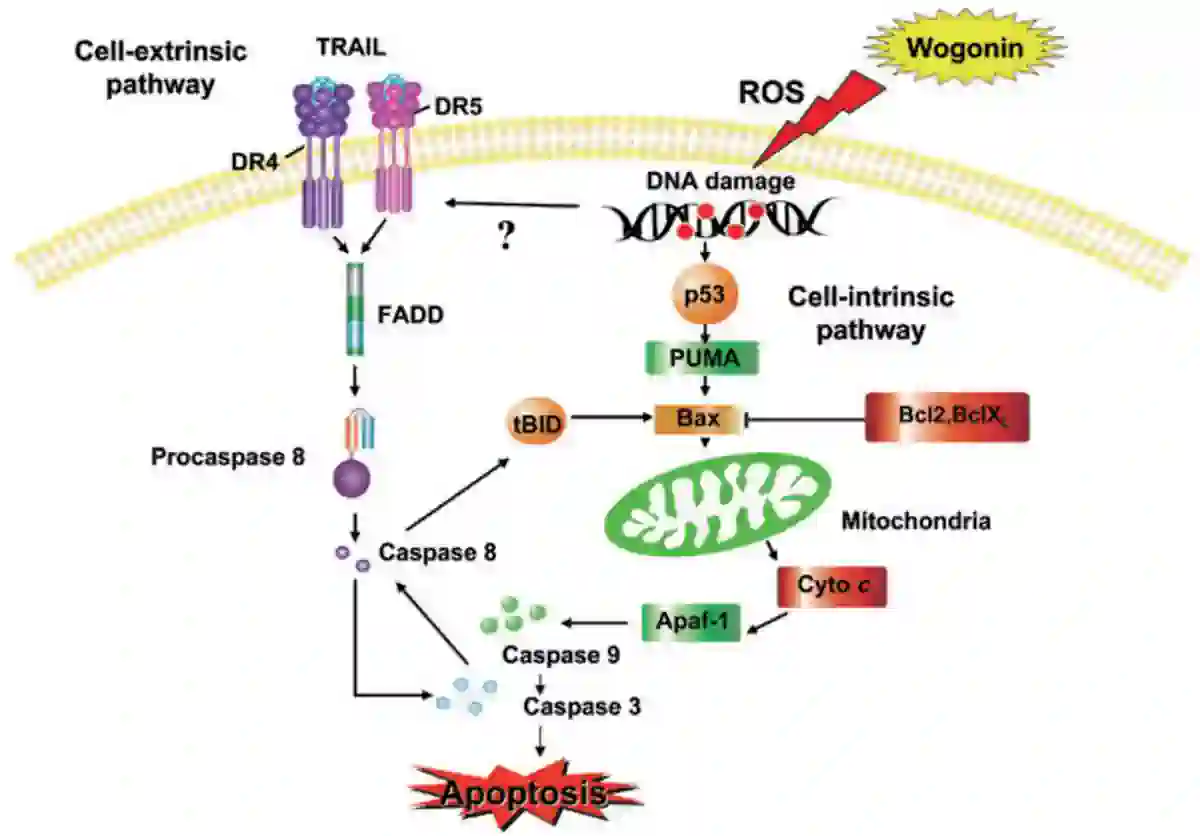
Figure 1. Wogonin sensitises prostate cancer cells to TRAIL-induced apoptosis. TRAIL (tumour necrosis factor-related apoptosis-inducing ligand) is an anticancer cytokine that activates apoptosis (programmed cell death) in cancer cells. However, some cancer cells resist this signal. Wogonin of Baikal skullcap helps overcome that resistance and allows TRAIL to work more effectively. Source: Lee et al. (2009), British Journal of Pharmacology.
3. Vascular Protection
Interestingly, preclinical research also shows the promising potential of Baikal skullcap in supporting vascular health, particularly by reducing vascular inflammation and preventing abnormal blood clot formation. One of its major bioactive compounds, baicalin, could mitigate the expression of adhesion molecules like ICAM-1 (intercellular adhesion molecule-1) and VCAM-1 (vascular adhesion molecule-1), which normally help immune cells stick to blood vessel walls and trigger inflammation. Baicalin has also been found to reduce platelet hyperactivity, a condition where blood platelets become over-reactive and form unnecessary clots. Platelet hyperactivity raises the risk of serious vascular events, such as stroke, heart attack or deep vein thrombosis. These anti-inflammatory and anti-thrombotic properties make Baikal skullcap a promising candidate for supporting vascular health, which may explain its traditional use in treating hypertension, although more human studies are needed to confirm these effects.
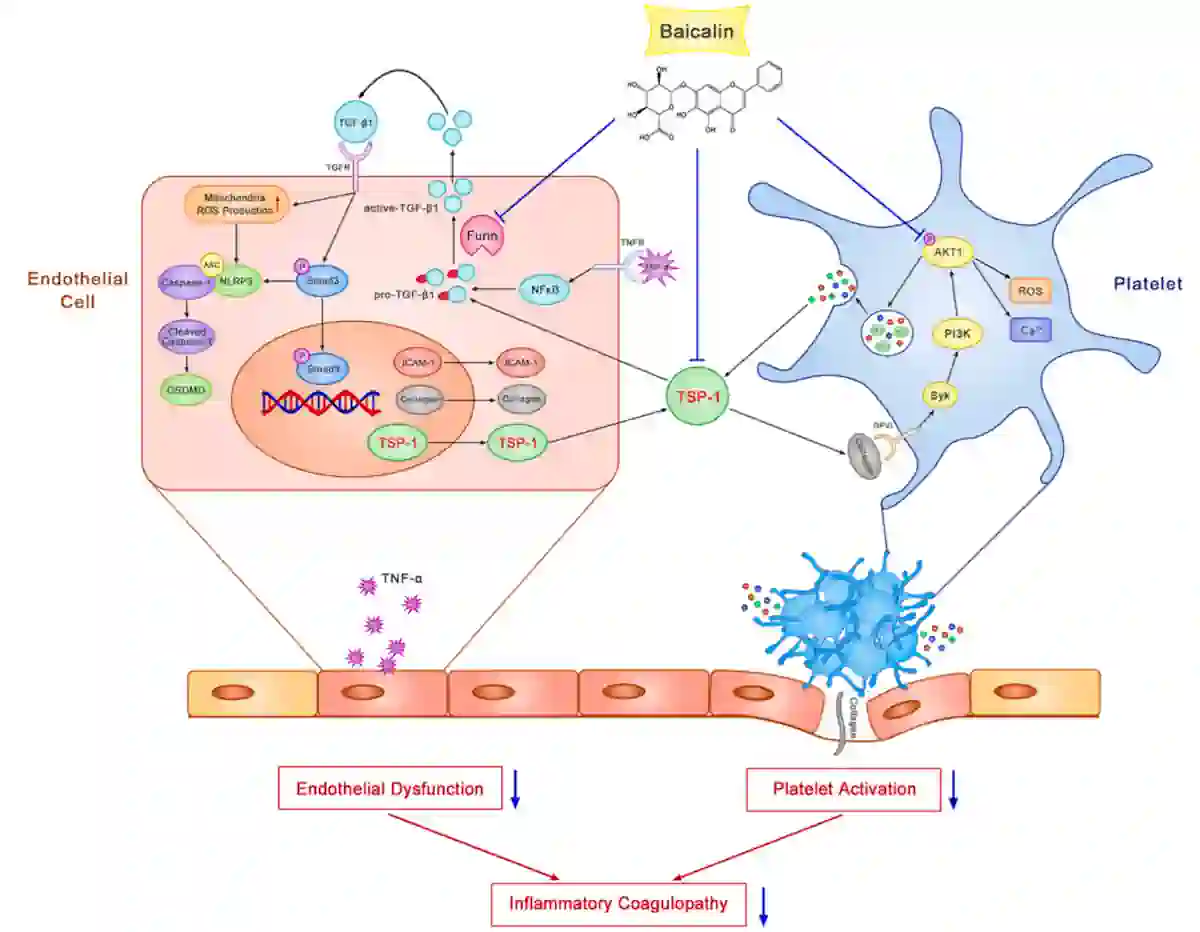
Figure 2. How baicalin, a bioactive compound in Baikal skullcap, helps protect blood vessels. In cells lining the blood vessels (endothelial cells), baicalin blocks harmful signalling pathways that would otherwise trigger inflammation, oxidative stress and cell damage. It also reduces the production of molecules that promote vascular inflammation and clot formation. Baicalin also helps prevent excessive platelet activation and clumping. Together, these effects protect the blood vessel lining and reduce the risk of inflammatory clotting complications. Source: Wang et al. (2023), European Journal of Pharmacology.
“Baikal Skullcap (Scutellaria baicalensis), Mint family (Lamiaceae).” by Andrey Zharkikh is licensed under CC BY 2.0