
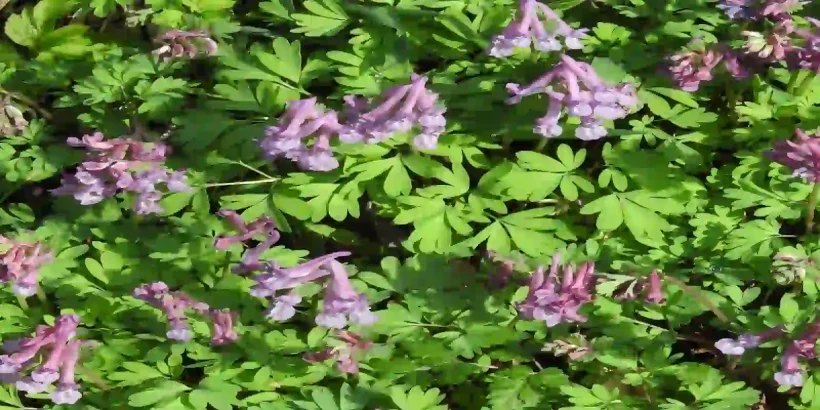
The rhizome (underground rootstalk) of Corydalis yanhusuo has been treasured in traditional Chinese medicine for centuries as a natural pain reliever, with records of its use for chest pain dating back to the Tang Dynasty (618–907 AD). Today, modern science not only confirms its analgesic properties but also reveals a broader range of health benefits. Rich in diverse alkaloids, C. yanhusuo shows potent anticancer activity, calms nerve-driven pain and supports tissue repair by reducing inflammation and promoting cell survival.
1. How does Corydalis yanhusuo fight cancer?
C. yanhusuo shows promising anticancer potential, largely due to its diverse alkaloid content. For example, dehydrocorydaline and protoberberine alkaloids have been found to trigger signalling pathways that lead to apoptosis (programmed cell death) in cancer cells. Specifically, dehydrocorydaline switches on caspase enzymes, while protoberberine activates signals through the epidermal growth factor receptor (EGFR), both of which drive cancer cells toward apoptosis. Extracts of C. yanhusuo have also demonstrated multiple anticancer actions in preclinical studies, such as inducing apoptosis, halting the cell cycle to stop uncontrolled division and inhibiting cancer cell migration.
Another alkaloid, glaucine, stands out for its chemosensitising effects, i.e., sensitising drug-resistant cancers to chemotherapy. Drug‑resistant cancer cells often use efflux pumps, such as P‑glycoprotein (P‑gp) and multidrug resistance‑associated protein 1 (MRP1), to expel chemotherapy drugs. Remarkably, glaucine can block both P‑gp and MRP1 at the same time. Such a dual inhibition is rare and may help overcome one of the main shortcomings of most chemosensitising agents, which typically block only a single pump.
2. Can Corydalis yanhusuo alkaloids stop tumour growth?
C. yanhusuo is originally renowned in traditional Chinese medicine for its pain‑relieving properties, which modern research now attributes to its analgesic alkaloids. A 2017 study found that levo-corydalmine, one of the alkaloids in C. yanhusuo, reduced bone cancer pain in rats. This effect stemmed from levo-corydalmine’s ability to simultaneously block two types of glutamate receptors in the spinal cord (i.e., NMDA and mGlu1/5), which are major drivers of pain sensation. By dampening overactive pain signalling at the spinal level, levo‑corydalmine achieved potent and sustained pain relief.
More recently, a 2025 study identified several C. yanhusuo alkaloids (e.g., cavidine, tetrahydropalmatine and dehydrocorydine) that can bind to the P2X3 receptor involved in pain signalling. One standout alkaloid, cavidine, was shown to suppress P2X3‑driven calcium influx, dampen overactive pain signalling and inhibit downstream inflammatory pathways, which increased pain tolerance in mice with chronic pain caused by nerve injury (Figure 1). Tetrahydropalmatine is another alkaloid of C. yanhusuo with broad analgesic actions, easing pain in conditions as varied as heart disease, liver injury, and even opioid and cocaine addiction. Taken together, these studies support the potential of C. yanhusuo alkaloids to address chronic pain arising from cancer, nerve injury or other chronic diseases.
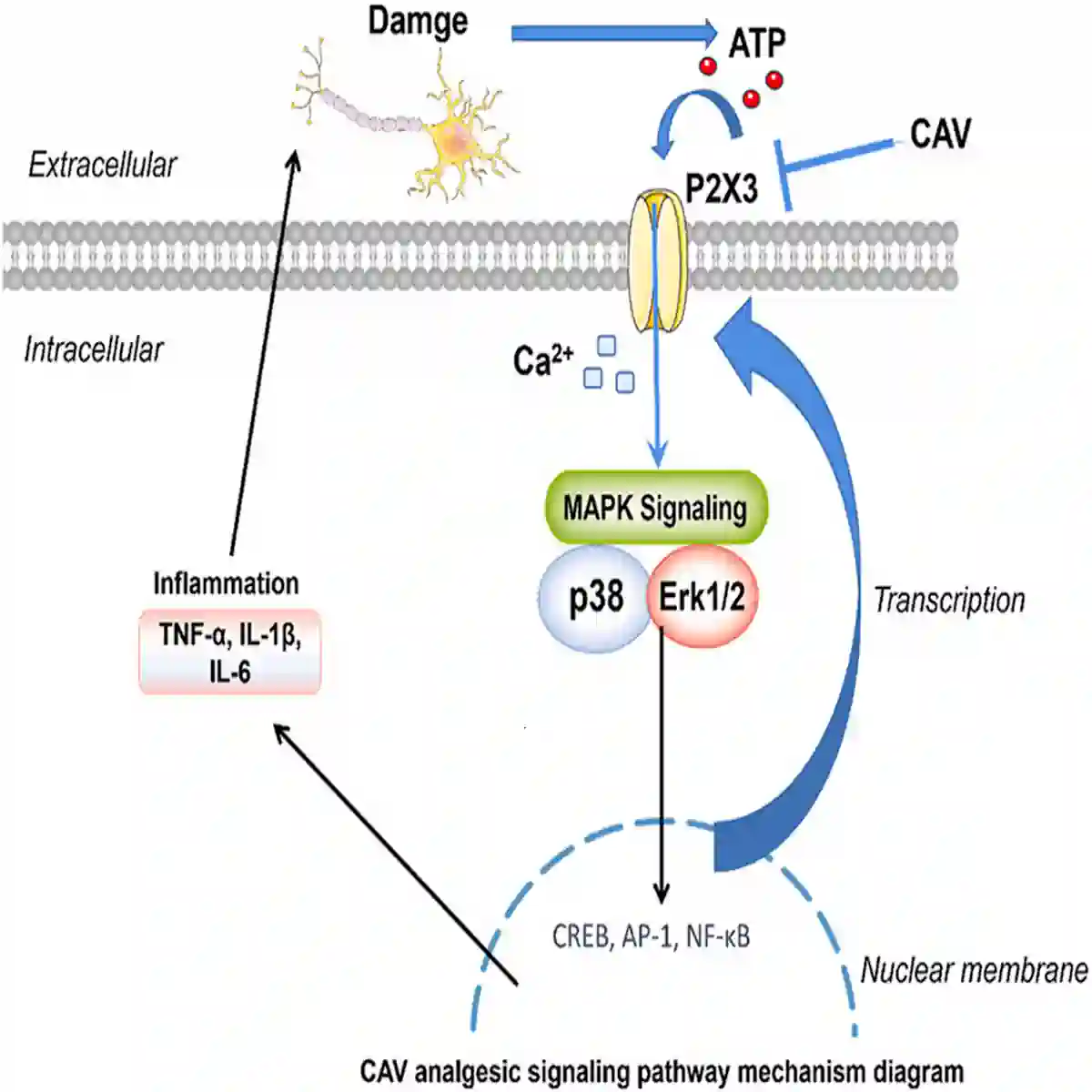
Figure 1. How cavidine (CAV) alkaloid from Corydalis yanhusuo reduces pain and inflammation. When nerves are damaged, they release ATP, which activates P2X3 receptors on nerve cells and triggers pain signals. Cavidine blocks P2X3 receptors, reducing calcium influx and calming overactive pain signalling inside the cells. This slows the production of inflammatory messengers (e.g., TNF‑α, IL‑1β and IL‑6), decreases nerve inflammation and helps relieve pain. Source: Luo et al. (2025), Journal of Ethnopharmacology.
3. What makes Corydalis yanhusuo an effective natural analgesic?
The anti‑inflammatory mechanisms that help C. yanhusuo relieve pain also help tissues recover from injury. This is exemplified by laboratory models of heart attack, where heart cells are grown under oxygen-deprived conditions to mimic cardiac stress. In these models, C. yanhusuo extracts, particularly tetrahydropalmatine, protected the heart cells by activating cell survival pathways and reducing the release of inflammatory molecules. Similarly, a 2022 study showed that C. yanhusuo tetrahydropalmatine mitigated lung inflammation caused by poor circulation (a condition called ischemia-reperfusion injury) by shifting macrophages from a pro‑inflammatory (M1) state to a tissue‑repairing (M2) state.
Macrophages are immune cells that can switch between the M1 state, which fights infection but can damage tissues if overactive, and the M2 state, which calms inflammation and supports tissue repair. Recently, a 2025 study also reported that C. yanhusuo tetrahydropalmatine activated cell survival signalling pathways and shifted macrophage state from M1 to M2 to aid nerve regeneration in rats (Figure 2). Therefore, C. yanhusuo alkaloids not only curb harmful inflammation but also foster a regenerative environment for tissue healing.
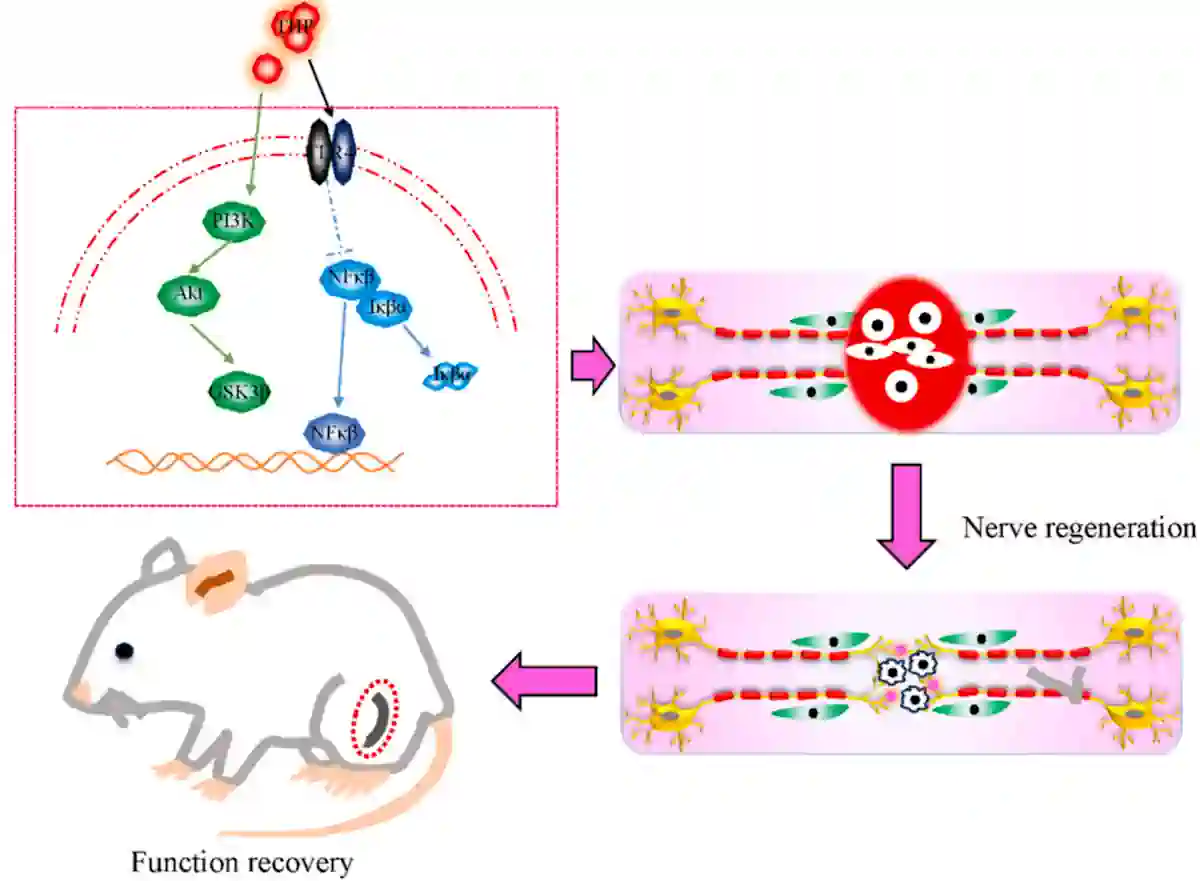
Figure 2. How tetrahydropalmatine (THP) from Corydalis yanhusuo supports nerve repair. In the early stages of nerve injury, THP activates cell survival signalling pathways (PI3K/Akt/GSK3β) and blocks inflammatory signalling pathways (TLR4/NF‑κB). This shifts macrophages from an inflammatory M1 to a healing M2 state, which creates a supportive environment for nerve regeneration. Source: Jiang et al. (2025), International Immunopharmacology.